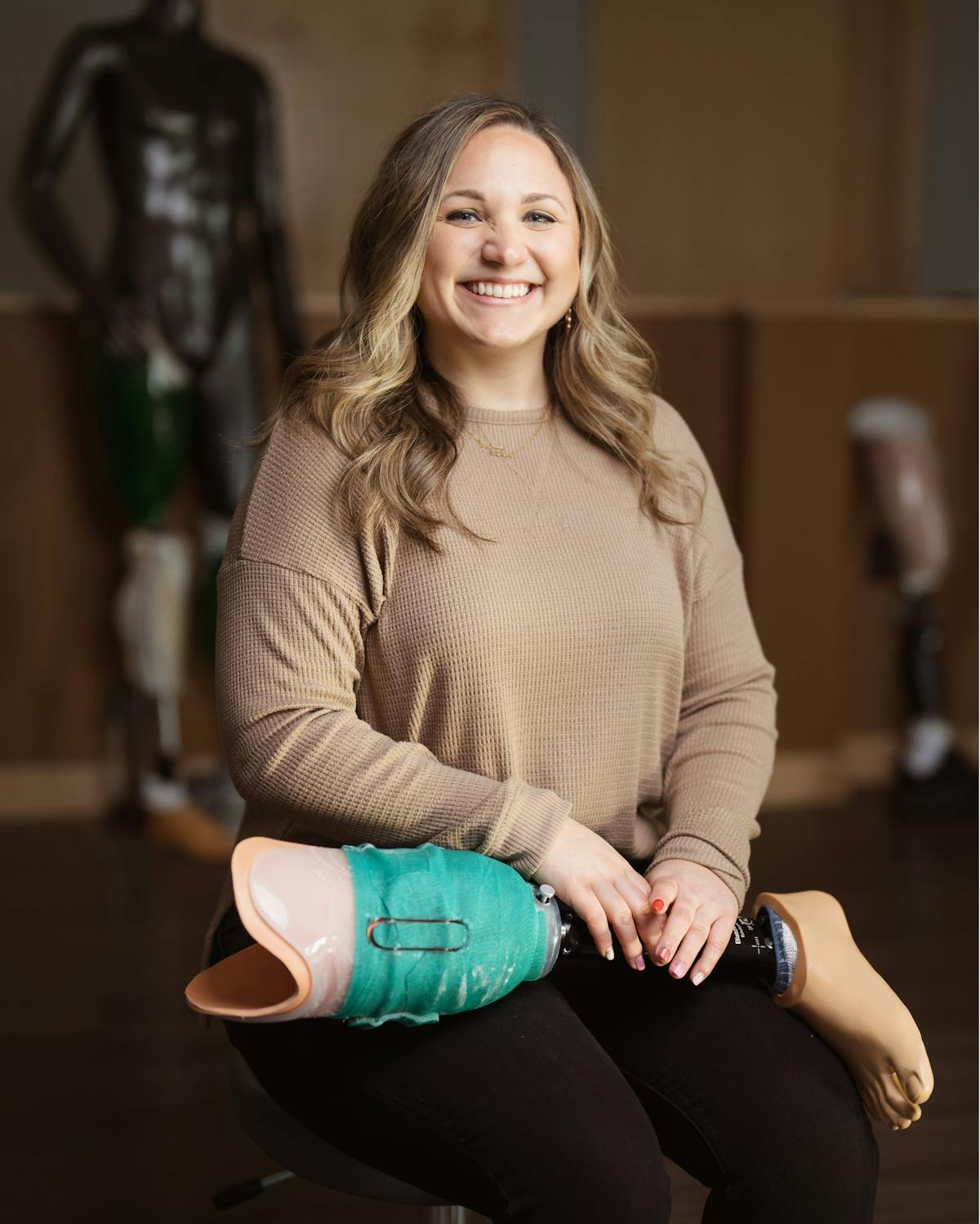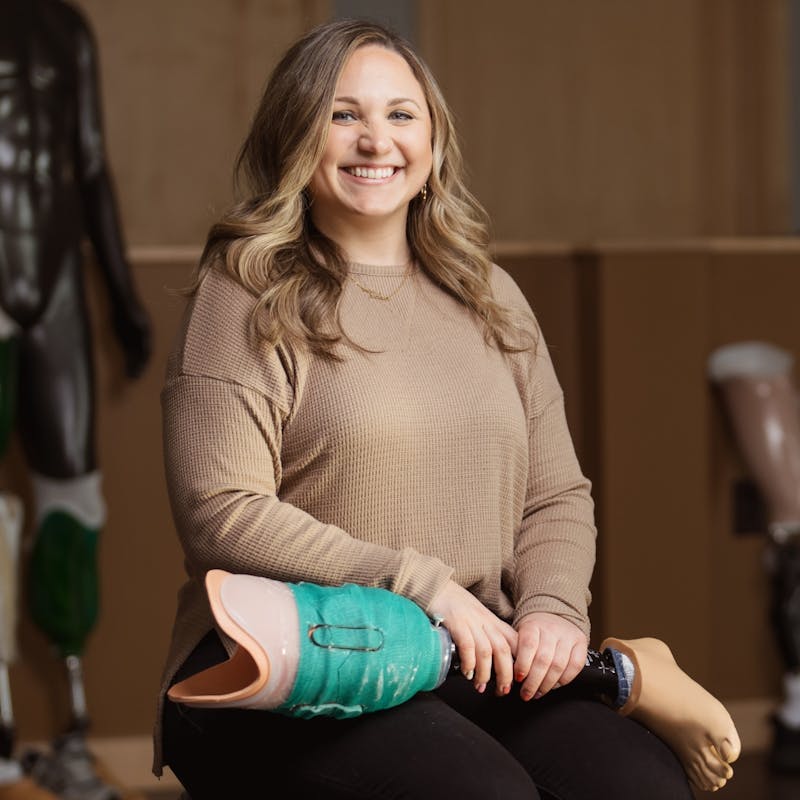

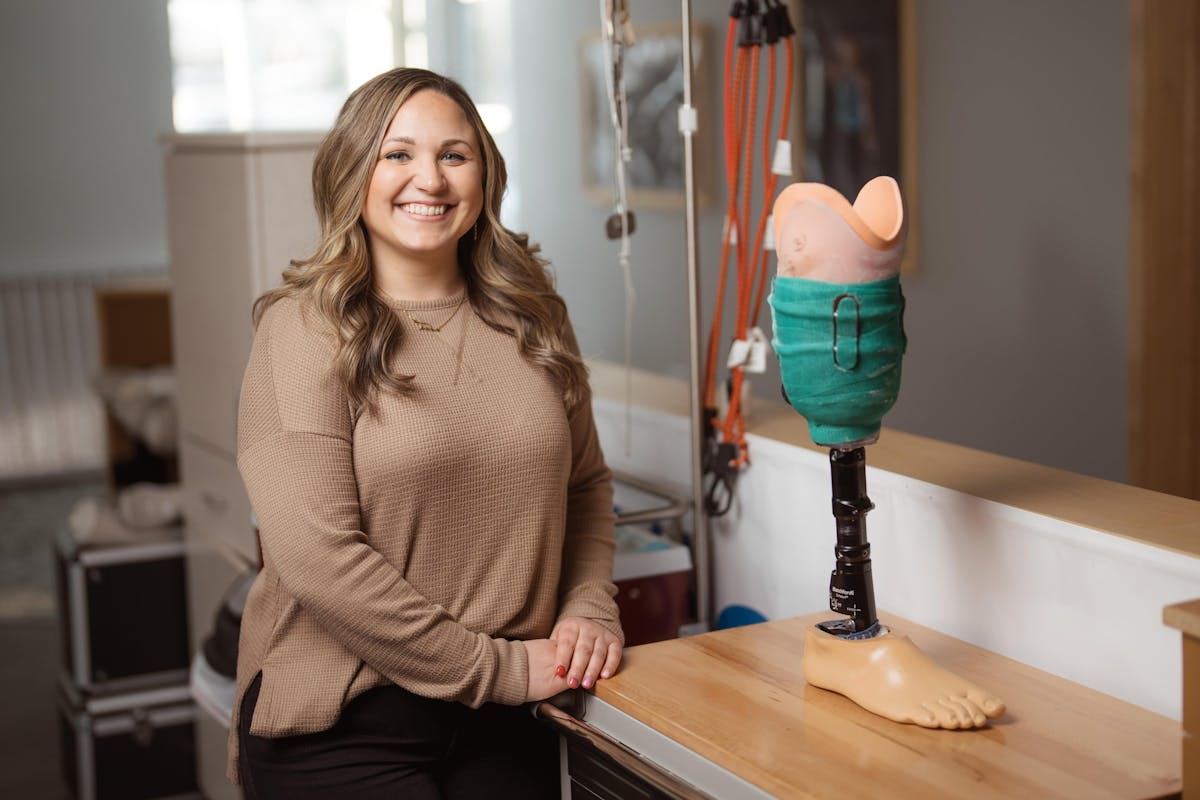
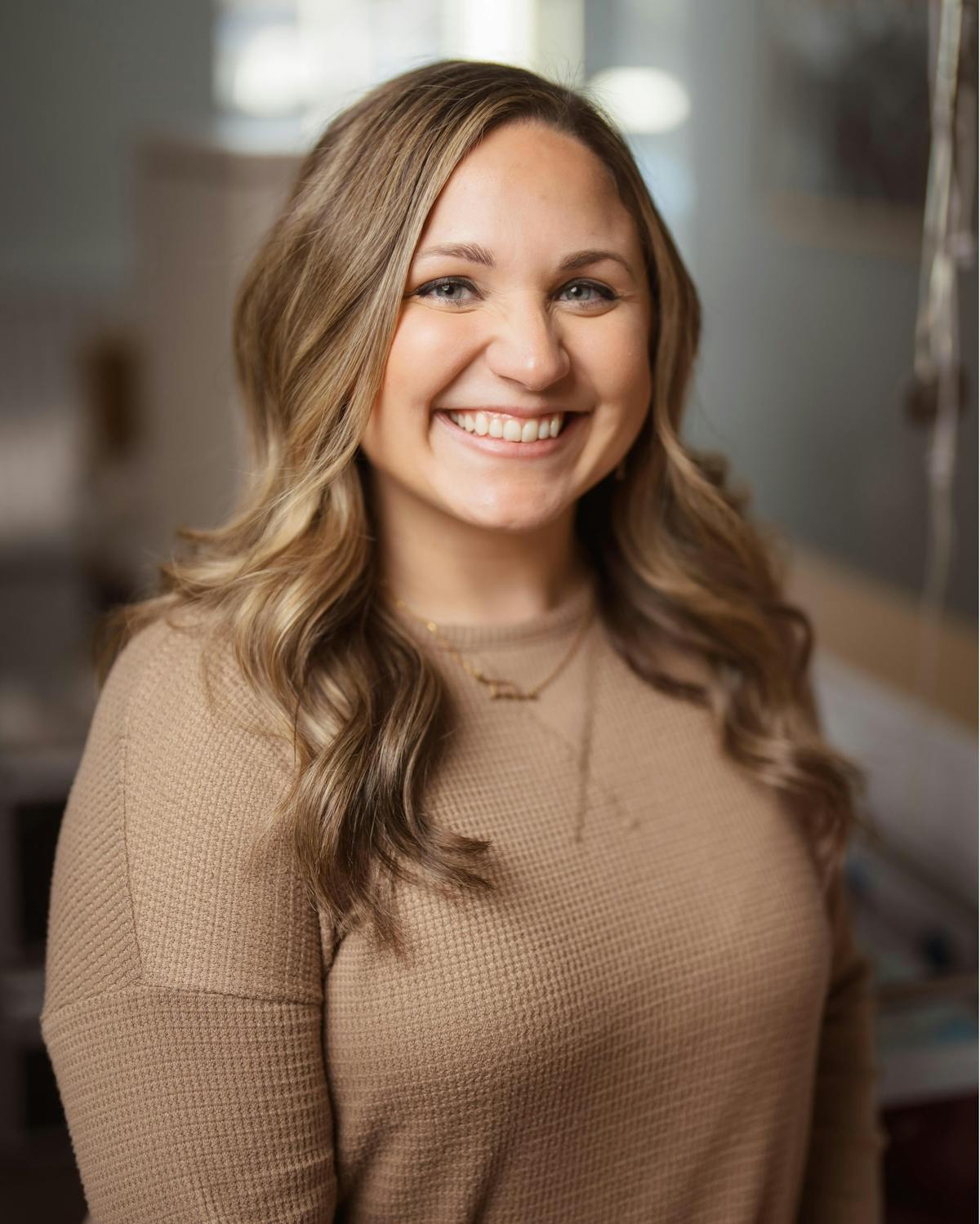
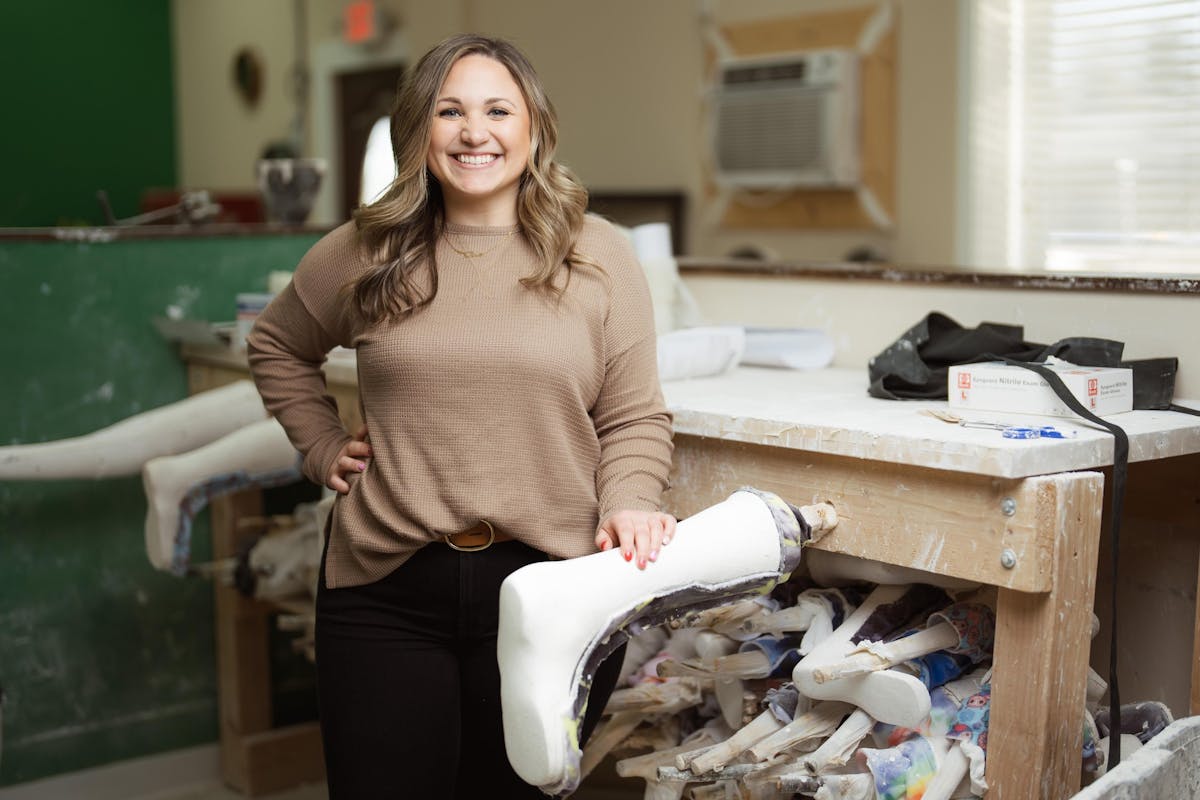
“My name is Tessa Leppek, born and raised in Bay City. I work at Oakland Orthopedic Appliances as a certified orthotist, and I’m on my way to be certified prosthetist. Orthotics are devices like wrist braces, ankle braces, knee braces, all that kind of stuff. Prosthetics are devices that replace a lost limb like an arm or a leg.
I chose this field because it was a hands on, medically-based field that isn’t invasive. We're not doing the surgeries, but we are physically getting someone back to where they're able to function and perform activities of daily living. They go from, ‘This is my hardest day of my life,’ to going camping, playing sports, or doing everything they want to do again. It's amazing to see them progress.
I went to John Glenn High School, then Delta College, then to Eastern Michigan University,then I worked at Oakland Orthopedic for four months as an intern, and then they hired me. While I was working, I was able to get experience, build up my resume, and then was able to get into Northwestern University in Chicago.
Chicago was really cool, but I came back because I had never dreamed about permanently moving out of Bay City. This is where I grew up, this is where everybody is, my family and friends. And with my job at Oakland Orthopedics, they basically put me on leave so when I left Chicago, I had my job back. Everything fell in line and I've just never seen myself going anywhere else.”
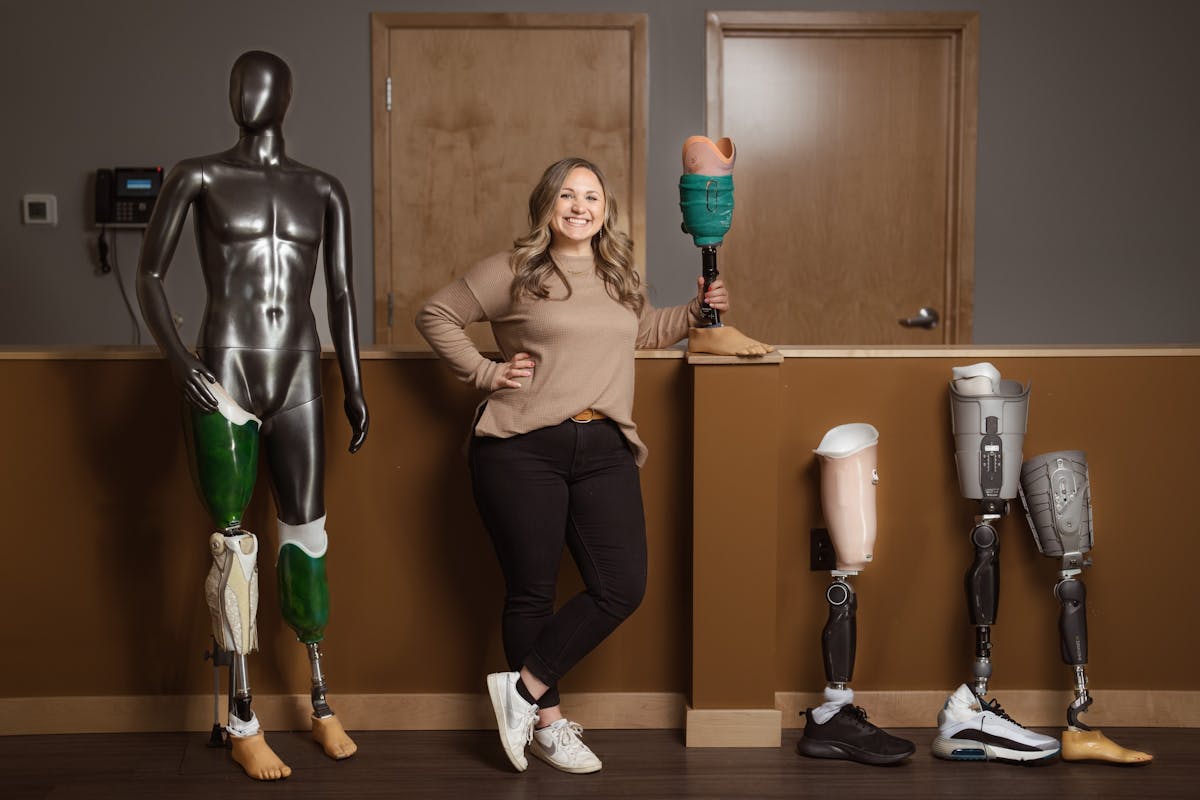
“Every year, I try to get back into a classroom and do a presentation about orthotics and prosthetics as a career to show these juniors and seniors that this is out there. I just did one a couple months ago, and it just makes me feel so happy that some do reach out and want more information.
It’s a small field that almost no one knows exists. It’s weird to say, but that gives you job security. If you like the health field and seeing patients, but you're not sure about doing the whole surgery aspect or long and super intense education, this career is a good avenue. Orthotics can be simple but there are challenges depending on the patient you’re working with. But you get to do troubleshooting, hands-on skills, and learn and understand anatomy. There's a lot of engineering and physics that go into this job, which that's my very least favorite, but you can still pursue this career if those things aren’t your favorite things either.
And the interacting with people is great, because once you lose a leg, you're going to come see me for the rest of your life. For other health issues, you will jump around to different people, but you're going to always come to me for this. With doctor’s offices and medical places, it's usually like 15 minutes and then you're in and out of the room. We have patients that don't leave for two hours. It's just fun because they are that comfortable just to hang out.
You get to know them better and that’s awesome. They come into the office and you know them like, ‘How was your trip to Mexico?’”

“In 2011, I lost my dad to a heart attack while I was a freshman in high school. That news went throughout the whole city. It was really hard losing a parent at 13, having to go through all the sports and everything that he coached. I had my sister, thankfully, still in high school with me, so we teamed up to lean on each other.
Then my mom passed in January of 2021. She had a lot of sorrow, mourning and grief after my dad passed away, and ended up getting a lot of anxiety and depression from it. She went in for an MRI after she broke her wrist playing with the nephews. At the time, my sister worked as an x-ray tech, and one of her co-workers came up to my mom and said, ‘Pam, are you okay?’ She saw my mom’s entire left side of her body drop, and she fell. It was a massive stroke.
That was really hard, and worse just for the fact that we had to go up there and choose what to do. Do we want to keep her on life support? Or do we want her to just go naturally? The only good thing that came out of that was that she's with my dad now.
Thankfully, I have three older sisters and we're able to be there for each other. I would say to anyone going through something similar, take the time to be with your family and share your thoughts. Don't bottle it up, because that doesn't work.
If you don't have siblings, a close-knit family, or friends you can talk to, go to a therapist. Going to a therapist, even for just a short amount of time or however many times you need to, can be a giant help. In some ways, it might be better than going to your family because they don't know you and it’s nice to have one-on-one conversation where they're not biased.
And you find someone you’re able to talk to, keep them close.”
“There's just so many moments that encouraged me to choose this path, like with pediatrics and orthotics. We work a lot with helmet care, which is called a cranial remolding helmet, or CRO. A lot of times, twins or babies who have spent time in the NICU will develop a flat spot on their head. A lot of the parents will blame themselves, ‘What did I do to cause this?’, but it’s not their fault. Twins are in the belly without much room, and have no control of what's happening there. Or with the NICU babies, most of the time they have to lay on their back to have all the necessary cords on them, so the nurses can’t be flipping them. It's nothing on the fault of the parents, and the helmet helps the skull grow to the path of least resistance.
Sometimes, these parents are vulnerable, and when they see the helmet, they’re thinking, ‘This is my four-month-old baby and you're not touching them with that!’ We explain how the device works, how it doesn’t hurt, and how helpful it will be. We’ll see them weekly, and the parents, even after only one week of their baby having the helmet on will say, ‘Oh my gosh, look at this! It’s fixed!’ It won’t be completely fixed to the numbers we need, but to the eye, yes. Those little things are just amazing to see.”
– Tessa Leppek, certified orthotist at Oakland Orthopedic Appliances